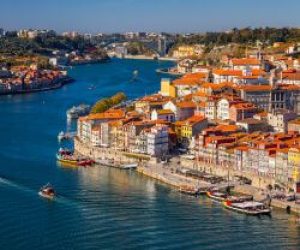
In recent years, we’ve noticed a clear shift in how our clients explore cities. Transport is no longer just about efficiency — it has become part of the experience itself. Increasingly, travellers are drawn to metro lines that reveal a city’s history, architecture, and character beneath the surface.
Across Europe, certain metro systems stand out not only for their design but for the stories they uncover — from ancient ruins beneath Rome to scenic crossings in Porto. Below, we share the metro lines we suggest our clients experience when exploring Europe’s great cities.
1. Rome — Metro Line C: Where Archaeology Meets Modern Travel
Rome’s metro network is famously shaped by what lies beneath it. Nowhere is this more evident than on Metro Line C, the city’s newest and most ambitious underground line.
With the recent opening of Colosseo–Fori Imperiali and Porta Metronia stations, Line C has introduced a new way to experience Rome — quite literally underground. These stations were built around archaeological discoveries uncovered during construction, transforming daily transport hubs into immersive historical spaces.
At Colosseo–Fori Imperiali, travellers move past preserved Roman artefacts, ancient walls, and remains dating back over two millennia, all while stepping off a modern metro train just moments from the Colosseum itself. Porta Metronia offers similar moments of discovery, with preserved military structures and mosaic floors integrated into the station design.
Our advice: We suggest our clients use Line C not just for convenience, but as part of a cultural itinerary — especially when combining the Colosseum, Roman Forum, and nearby historic neighbourhoods.
Explore Rome’s ancient landmarks in depth with our Roman history tour, combining iconic sites like the Colosseum, Roman Forum, and historic neighbourhoods into one immersive cultural journey.
2. Porto — Metro do Porto: A Scenic Way to Discover the City
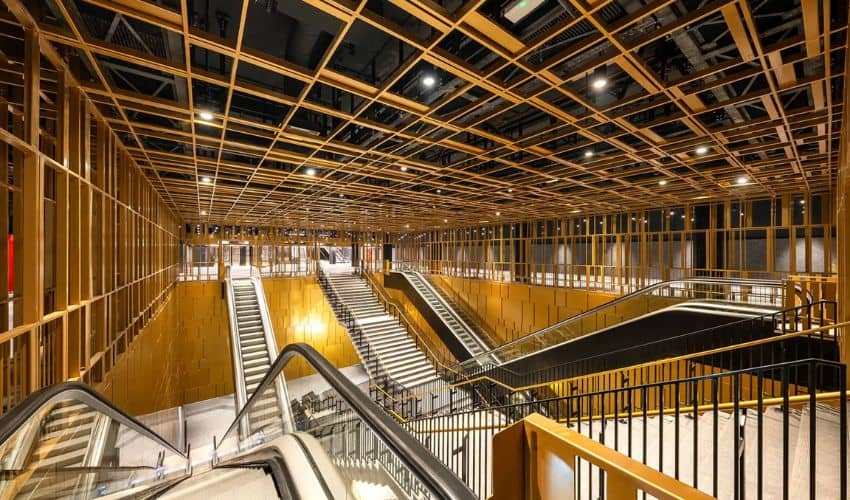
Porto’s metro system offers a completely different experience. Rather than remaining hidden underground, much of the Metro do Porto operates above ground, allowing travellers to take in the city as they move through it.
The network connects Porto’s historic centre with its suburbs, coastline, and airport, blending light-rail technology with traditional metro lines. Several routes cross the Douro River, offering memorable views over the Ribeira district and Porto’s iconic bridges.
Lines such as Line C (Green) and Line D (Yellow) are particularly enjoyable for visitors, passing through lively neighbourhoods and major landmarks while offering panoramic perspectives that are often missed when travelling on foot alone.
Our advice: We suggest our clients use Porto’s metro not only for airport transfers, but as a relaxed way to explore the city’s wider geography — especially for those staying longer or visiting nearby coastal areas.
3. Naples — Art Stations on the Naples Metro
Naples is home to one of Europe’s most visually striking metro projects. Designers created several stations on Line 1, including the famous Toledo Station, as part of an ambitious public art project..
These stations feature contemporary installations, dramatic lighting, and architectural design that transform routine travel into an artistic experience. Toledo Station, in particular, is frequently cited among the most beautiful metro stations in Europe.
Our advice: Even short metro journeys in Naples can be culturally rewarding. We suggest our clients include at least one ride on Line 1, particularly when moving between the historic centre and the waterfront.
4. Lisbon — Metro Stations as Architectural Statements
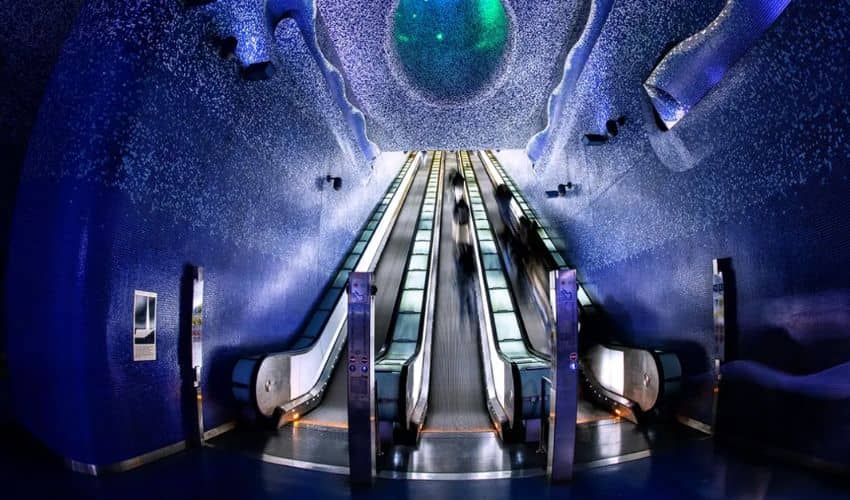
Lisbon’s metro system is known for its strong artistic identity. Stations such as Olaias showcase bold colours, geometric forms, and modern design elements that reflect Portugal’s creative heritage.
Unlike older European systems, Lisbon’s metro feels light and contemporary, offering an enjoyable contrast to the city’s historic streets above.
Our advice: We recommend our clients pay attention to station design while navigating Lisbon — several stops are worth slowing down for, especially for travellers with an interest in architecture and design.
Why Metro Lines Matter for Today’s Traveller
Metro systems reveal how cities evolve — balancing heritage, innovation, and daily life. For travellers, they offer:
- Cultural insight beyond traditional attractions
- Efficient access to major landmarks
- Unexpected architectural and historical encounters
Increasingly, we see metro journeys becoming part of the story our clients take home from a destination.
If you enjoy transport experiences that become part of the journey, you may also like our guide to luxury train journeys in Europe, where travel itself is the highlight.
Our Travel Insight
When planned thoughtfully, metro lines can enhance a city’s experience rather than simply support it. We encourage our clients to view urban transport as an extension of exploration — one that reveals layers of history, creativity, and local life often hidden from view.
Whether travelling beneath ancient Rome or gliding above Porto’s riverbanks, Europe’s metro lines offer journeys worth taking in their own right—start planning your scenic ride today.